Northwoods Neighborhood
Preserving and Enforcing the Town of Round Lake’s Non-Metallic Mining Licensing Ordinance
Let’s Protect Our Northwoods Community.
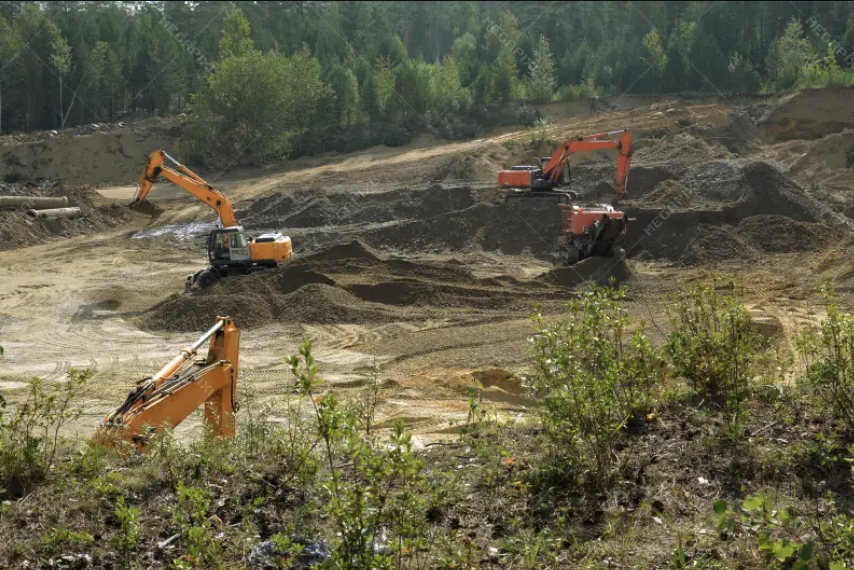
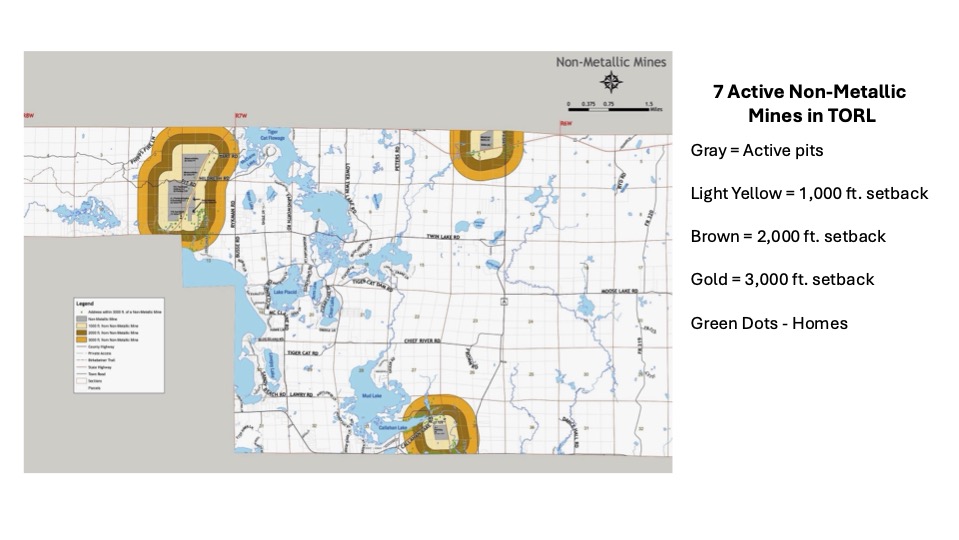
Mining activity in the Town of Round Lake, Wisconsin, has increased significantly due to The Preserve development and other projects. We have seven active gravel/rock-crushing operations in our Town, including four in a one-mile stretch between Twin Lakes and Tart Roads along Highway 77.
We recognize the need for gravel and support responsible mining. Our group of concerned citizens exists for two reasons: 1) To press our local governments to enforce regulations; and 2) To ensure local gravel pits comply with them.
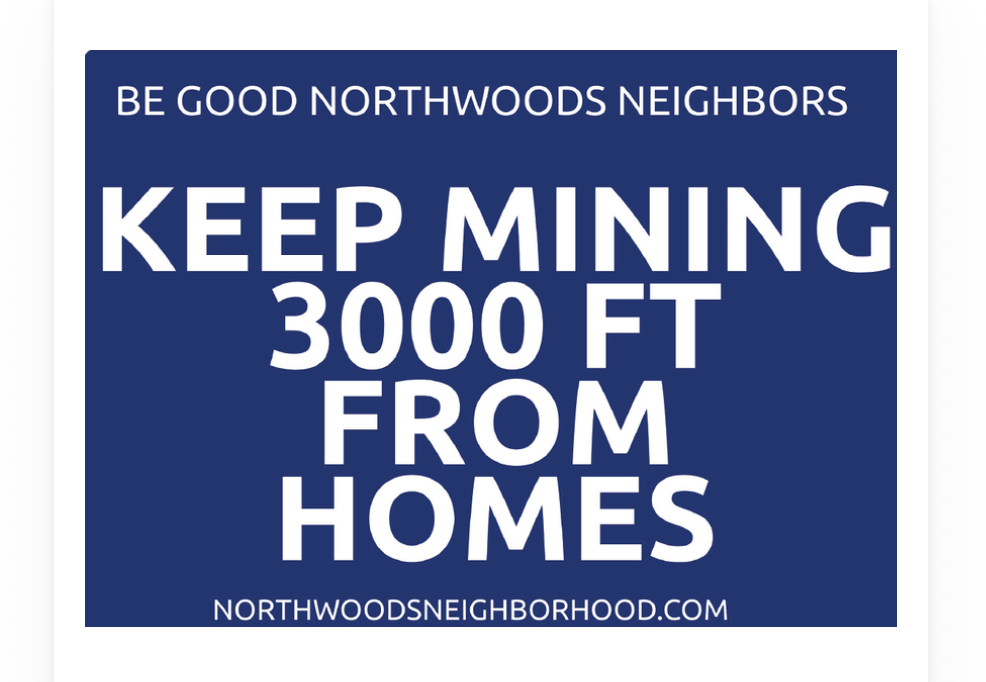
To protect residents, property owners and the environment, the Town Board in 2022 passed Non-Metallic Mining Licensing Ordinance No. 2022-04. It mandates that any new or expanding pits stay 3,000-feet from the nearest home. Noise caps, dust mitigation, air and water quality monitoring, and annual inspections are also required. Any new pit or expansion must have a Sawyer County Conditional Use Permit (CUP) and then apply for a separate Operator’s License from the Town of Round Lake.
Why The Town Ordinance Matters
- Guarding water quality and well levels
- Limiting dust and noise impacts
- Protecting property values
- Maintaining the Northwoods character of our community
The ordinance was questioned this year because of 2023 Wis. Act 12 limiting local mine regulation. But the Town attorney found the ordinance to be legally defensible. The Town Plan Commission is now working to clarify some of its clauses.
If our Town Board is not committed to enforcing our ordinance on new pits and expansions, we need to oppose these permit applications in the earlier Sawyer County Zoning process.
Concerned citizens will continue working to compel open government and keep mines to their current footprints. Our specific goals are:
- Continue affirming the legal validity of our Town regulations as they relate to Wisconsin Act 12 and Sawyer County Zoning
- Participate in Land Use Planning Commission meetings where the ordinance is being interpreted and revised, per the Town attorney
- Contest CUP applications that would grant operation within our Town 3,000-foot setback for all new operators and expanding mines
- Ensure meaningful safety inspections
- Press for Wis. Open Meetings Law compliance to prevent non-public agreements with mine owners
- Advocate for transparent, qualified town leadership that prioritizes residents and property owners
We all play a part in protecting the Northwoods character so important to our quality of life and property values. Stay informed, share information with your neighbors, and attend Town and County Zoning meetings.
If you know of anyone who should be on our contact list, please let us know. To help defray costs, please contribute financially:
- Write checks to “Northwoods Neighborhood, LLC” and mail to P.O. Box 54, Hayward, WI. 54843
For questions and to be added to our contact list, email info@northwoodsneighborhood.com.
News and Details
Work with Us
An engaged community is the best way to keep industry accountable.
There are two mine expansions around the corner: Milestone Materials intends to reactivate the former Kramer pit southwest of Hwy 77 and Gravel Pit Road. Select Materials may apply to open a new pit on forest land near Hildreth Rd.
We need to monitor these applications and prepare appropriate responses at the County Zoning and Town licensing levels.
If you would like alerts and invitations to action meetings, email us using the Contact Us page below.
It’s also critical to show up and comment at meetings of the Town Planning Commission and Board of Supervisors, as well as Sawyer County Zoning Commission meetings. Check Town meeting schedule and agendas here. To see County Zoning meetings, check here.
Results of Action
At the Annual Electors Meeting in April, we unanimously passed a resolution asking the Board to protect and enforce the ordinance and govern according to the Town’s Comprehensive Plan, which places the highest priority on protecting the character of our Northwoods community. (The Board has tabled our resolution.)
We have since had four successes in holding mines to account:
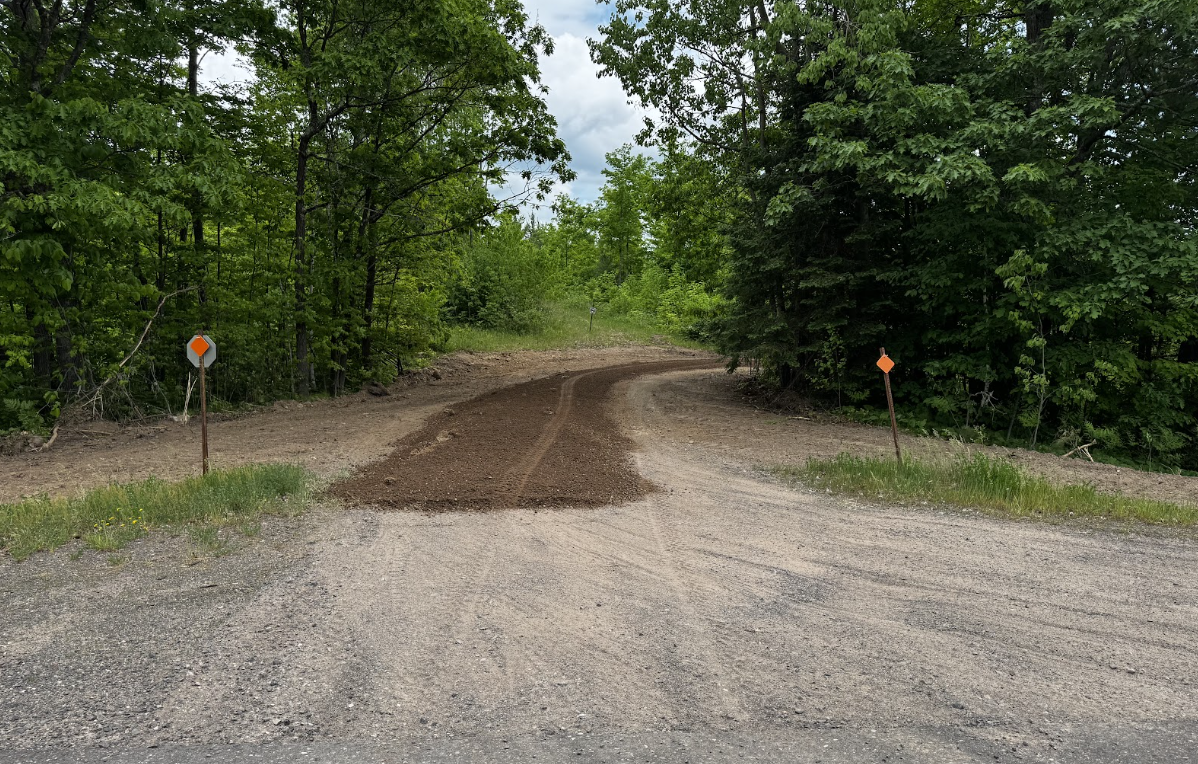
1) We alerted Sawyer County Zoning and the Wis. Department of Transportation to flagrant permit violations by a local mine. They both issued Cease and Desist orders. Now we are urging the County to require thorough reclamation of the disturbed sound barrier.
2) We persuaded the Town Land Use Planning Commission to recommend to the Board that they budget for a mine inspector and obtain and review all County conditional use permits (CUPs) for mines in the Town of Round Lake to see whether they are in compliance.
3) We obtained and prepared legal counsel to help us defend the ordinance at the critical July 15 Board meeting. The arguments helped stay a vote to compromise the ordinance.
4) We’ve organized a public information campaign and media relations efforts that help engage more of our community.
In these ways, we’ve sought to work within our system of government—to inform and collaborate with agencies, keep mining operations compliant with agreements, and ensure government remains responsive to citizen voices. This requires ongoing vigilance.

Why 3,000 Feet?
Mine owners contend that Sawyer County’s old zoning setback of 1,000 feet is adequate between mining activity and a home.
Our Ordinance No. 2022-04 uses more current data. It was drafted by a leading environmental law firm, Midwest Environmental Advocates and passed unanimously by our Board in 2022. Here is why its 3,000-foot buffer is important:
1. Groundwater and wells Digging near or into the water table removes the layer of soil that normally filters and buffers surface contamination before it reaches groundwater. Once a pit floor sits at or below the water table, it becomes a direct, unfiltered pathway between the surface and the aquifer. Fuel, oil, and hydraulic fluid from mining equipment can reach groundwater almost immediately if spilled, with no soil layer to slow or filter it. At 1,000 feet, a spill or runoff event has a short path to nearby wells. At 3,000 feet, contaminants have far more distance and time to disperse, settle, or break down before reaching a home’s well. (Minnesota DNR, Hydraulic Impacts of Quarries and Gravel Pits)
2. Dust exposure. Air-dispersion modeling of mining dust (using the EPA’s AERMOD model) found elevated PM10 dust concentrations extending roughly 3 kilometers — about 9,800 feet — from the site before dropping to low levels. At 1,000 feet, homes sit well within the zone of highest measured dust concentration. A 3,000-foot setback is a meaningful improvement over 1,000 feet. It moves homes further from the peak-concentration zone nearest the pit, where levels are highest (MDPI, Modeling PM10 Emissions in Quarry and Mining Operations).
3. Property values. Multiple independent studies find that homes near aggregate mining sell for less, with the steepest losses closest to the pit. A broad review of aggregate-operation studies found price declines of 12 to 20 percent within about a half mile (roughly 2,640 feet), fading to 3 to 14 percent by one mile, and dropping toward zero by about 10 miles. At 1,000 feet, homes sit deep inside the zone where these studies find the largest losses. At 3,000 feet, homes are still close enough to be affected, but move well outside the steepest-decline radius. (Erickcek, 2006, cited in UW-Extension Buffalo County) (Appraisal Institute of Canada — Property Value Impacts Occasioned by Aggregate Extraction Operations)
Why can’t we just rely on Sawyer County for mine regulation? Why have a Town licensing ordinance that mine owners may view as duplicative?
- Sawyer Co. grandfathers permits for mines that are being reactivated, even under a new operator. Home-buyers move next door without notice or disclosure of this possibility.
- They don’t enforce permit conditions unless citizens report violations. We learned that by contesting an illegal road built out of a local pit onto Hwy 77.
- Based on inspection forms, County mine inspections are limited. They confirm taxed acreage, but do not check for any habitat or public safety issues.
All of this means that unless our Town ordinance is preserved and enforced, we have very little protection for our neighborhoods.